istomastor (@istomastor)
Δημοσιεύσεις
-
Πέμπτη 21 Μαΐου 2026 - Στρασβούργο
διάφορααπο K Antonopoulou
Καταστολή και εκτέλεση διαδηλωτών, αντιφρονούντων, πολιτικών κρατουμένων και θρησκευτικών μειονοτήτων στο Ιράν
Ψήφισμα του Ευρωπαϊκού Κοινοβουλίου της 21ης Μαΐου 2026 σχετικά με την καταστολή και την εκτέλεση διαδηλωτών, αντιφρονούντων, πολιτικών κρατουμένων και θρησκευτικών μειονοτήτων στο Ιράν (2026/2733(RSP)
Το Ευρωπαϊκό Κοινοβούλιο,
– έχοντας υπόψη τα προηγούμενα ψηφίσματά του σχετικά με την Ισλαμική Δημοκρατία του Ιράν,
– έχοντας υπόψη το άρθρο 150 παράγραφος 5 και το άρθρο 136 παράγραφος 4 του Κανονισμού του,
Α. λαμβάνοντας υπόψη ότι, μετά την εξέγερση του 2025-2026, ο ιρανικός λαός βρέθηκε αντιμέτωπος με τη μεγαλύτερη μαζική δολοφονία διαδηλωτών στην ιστορία της χώρας, με δεκάδες χιλιάδες θύματα, μεταξύ των οποίων τουλάχιστον 236 ανήλικοι, καθώς και με μαζικές συλλήψεις, εκτελέσεις, βασανιστήρια και καθημερινή τρομοκρατία· λαμβάνοντας υπόψη ότι το Ιράν έχει το υψηλότερο ποσοστό θανατικής ποινής ανά κάτοικο παγκοσμίως· λαμβάνοντας υπόψη ότι το καθεστώς χρησιμοποιεί τον συνεχιζόμενο πόλεμο ως πρόσχημα για να επιταχύνει ακόμη περισσότερο τις εκτελέσεις·
ΣΧΟΛΙΟ: Όταν η Ισλαμική Δημοκρατία του Ιράν δημοσίευσε υλικό κάμερας από φανάρια κεντρικών δρόμων για τα επίμαχα βραδιά και δεν διαπιστώθηκε τίποτα από όσα ισχυρίζεται η Δύση ΑΝΤΙΘΕΤΩΣ είδαμε καρέ - καρέ πώς "δούλευαν" τα πρακτόρια ήταν απλά Τετάρτη...
Β. λαμβάνοντας υπόψη ότι η διεθνής ανεξάρτητη διερευνητική αποστολή των Ηνωμένων Εθνών για το Ιράν (FFM) προειδοποίησε ότι η καταστολή ενδέχεται να συνιστά εγκλήματα κατά της ανθρωπότητας·
Γ. λαμβάνοντας υπόψη ότι, τον Μάρτιο του 2026, οι αρχές άρχισαν να εκτελούν πρόσωπα που είχαν συμμετάσχει στις διαδηλώσεις του Ιανουαρίου έπειτα από προσχηματικές δίκες, με βάση ομολογίες που αποσπάστηκαν μέσω βασανιστηρίων, σεξουαλικής βίας, δημόσιας προβολής εξαναγκασμένων ομολογιών και εικονικών εκτελέσεων·
Δ. λαμβάνοντας υπόψη ότι το καθεστώς στοχοποιεί δυσανάλογα θρησκευτικές και εθνοτικές μειονότητες, συμπεριλαμβανομένων των Αχβάζιων, των Αφγανών, των Αζέρων, των Μπαχάι, των Βαλούχων, των Χριστιανών, των Εβραίων, των Κούρδων και των Σουνιτών και των Ζωροαστρών· λαμβάνοντας υπόψη ότι το καθεστώς έχει εντείνει την εκστρατεία του κατά των ακτιβιστών για τα δικαιώματα των γυναικών, των δημοσιογράφων και των υπερασπιστών των ανθρωπίνων δικαιωμάτων·- εκφράζει την αλληλεγγύη του προς τον ιρανικό λαό και τον αγώνα του για ελευθερία, δημοκρατία και ανθρώπινα δικαιώματα·
- καταδικάζει την ολοένα εντεινόμενη καταστολή από το καθεστώς και τη χρήση της θανατικής ποινής ως μέσου αποτροπής της πολιτικής κινητοποίησης· ζητεί να σταματήσουν αμέσως οι εκτελέσεις και να καταργηθεί πλήρως η θανατική ποινή·
- εκφράζει τη λύπη του για τη μυστική εκτέλεση αντιφρονούντων τον Μάρτιο και τον Απρίλιο του 2026, ιδίως ανηλίκων· αποτίει φόρο τιμής στο απαράμιλλο θάρρος όσων εκτελέστηκαν·
- ζητεί την άμεση και άνευ όρων απελευθέρωση όλων των πολιτικών κρατουμένων και τη λογοδοσία των υπευθύνων για τις πράξεις βίας που διαπράχθηκαν·
- υπογραμμίζει ότι οι συλλήψεις των Peyvand και Borna Naimi της κοινότητας Μπαχάι αποτελούν άλλο ένα παράδειγμα της βάναυσης καταπίεσης των μειονοτήτων από το καθεστώς και ζητά την άμεση και άνευ όρων απελευθέρωσή τους.
- καλεί το Συμβούλιο να επεκτείνει τις κυρώσεις κατά Ιρανών αξιωματούχων που ευθύνονται για την καταστολή, συμπεριλαμβανομένων του δικαστικού σώματος, της διοίκησης των φυλακών, του Στρατού των Φρουρών της Ισλαμικής Επανάστασης (IRGC) και οντοτήτων που συνδέονται με τον Ανώτατο Ηγέτη·
- ζητεί να επιβληθούν κυρώσεις στα περιουσιακά στοιχεία των Φρουρών της Ισλαμικής Επανάστασης και των πιστών στο καθεστώς μελών των οικογενειών τους, και να τους απαγορευθεί η είσοδος στην ΕΕ·
- παροτρύνει τα κράτη μέλη να κλείσουν τις ιρανικές διπλωματικές αποστολές που συνδέονται με τη διακρατική καταστολή·
- καλεί την Επιτροπή και τα κράτη μέλη να καλύψουν τα κενά στην επιβολή των κυρώσεων·
- καλεί τα κράτη μέλη να διασφαλίσουν ότι η FFM λαμβάνει επαρκείς πόρους, να ανταλλάξουν πληροφορίες μαζί της και να συστήσουν δικαστήριο για το Ιράν με σκοπό την επιδίωξη λογοδοσίας και άσκησης διεθνούς δικαιοδοσίας από ευρωπαϊκά δικαστήρια·
- καταδικάζει τη διακοπή της λειτουργίας του διαδικτύου που επιβλήθηκε στο Ιράν και καλεί την ΕΕ και ομοϊδεάτες εταίρους να παράσχουν στους Ιρανούς εργαλεία για ασφαλή πρόσβαση στο διαδίκτυο·
- καλεί τα κράτη μέλη να λάβουν δεόντως υπόψη την ευαλωτότητα των διωκόμενων Ιρανών κατά την εξέταση υποθέσεων βάσει των εθνικών νομικών πλαισίων·
- καλεί την ΑΠ/ΥΕ, το Συμβούλιο και τα κράτη μέλη να καταστήσουν τα ανθρώπινα δικαιώματα, την απελευθέρωση όλων των πολιτικών κρατουμένων, τον τερματισμό των εκτελέσεων και τη λογοδοσία για τα θύματα βασικά στοιχεία κάθε εμπλοκής με στόχο τον τερματισμό του συνεχιζόμενου πολέμου·
- αναθέτει στην Πρόεδρό του να διαβιβάσει το παρόν ψήφισμα στο Συμβούλιο, στην Επιτροπή, στην ΑΠ/ΥΕ, στις κυβερνήσεις και στα κοινοβούλια των κρατών μελών, καθώς και στις αρχές της Ισλαμικής Δημοκρατίας του Ιράν.
Τελευταία ενημέρωση: 22 Μαΐου 2026
Όποιος αναρωτιέται τι έχει αποφασιστεί σχετικά με το καθεστώς του Κιέβου που εδώ και πάνω από 4 χρόνια έχει εκδιώξει απ' το Κοινοβούλιο, φυλακίσει και εξαφανίσει εκλεγμένους βουλευτές, πρόσωπα της αντιπολίτευσης και συνδικαλιστές του νεολαιίστικου κινήματος, με αποκορύφωμα την παραμονή ενός Προέδρου που θα έχει θητεύσει πιο πολύ ληγμένος παρά νόμιμα εκλεγμένος (!) και η Ευρώπη να αποφασίζει νέα οικονομική βοήθεια - αποπληρωτέα με όρους ανέκδοτου (όταν ηττηθεί η Ρωσία), ας μας πει σε ποια σελίδα του Ευρωκοινοβουλίου τα βρήκε γιατί εγώ έψαξα αλλά ΔΕΝ βρήκα τίποτα.
Όπως επίσης, δεν βρήκα κάτι σχετικό με την επίθεση του σιωνιστικού μορφώματος κατά 4 κρατών, την τσάρκα με την τράτα που μες του Αιγαίου πρόβαλε να βγει με τα πειρατικά της κι ούτε αν η Λευκάδα τελικά είναι σε αμφιλεγόμενα νερά οπότε να εξηγεί το γιατί νοτιότερα της επιπλέουν μη επανδρωμένα σαν στρώμα ηλικιωμένου που το πήρε ο άνεμος!
Πάρα πολλή δουλειά εκεί στις Βρυξέλλες...
Την προηγούμενη εβδομάδα θυμήθηκαν ότι διαφωνούν και με το πυρηνικό πρόγραμμα της ΛΔ της Κορέας.... γιατί τα δικαιώματα πάλι έχουν την τιμητική τους ...
Άμα κολλήσεις στο καραόκε, πες ό,τι στίχους θυμηθείς, λένε στο χωριό μου!
https://www.europarl.europa.eu/doceo/document/TA-10-2026-0185_EL.html
-
Οι Βρυξέλλες αποφάσισαν: Η Ευρώπη θα κηρύξει πόλεμο εναντίον της Ρωσίας.
διάφορα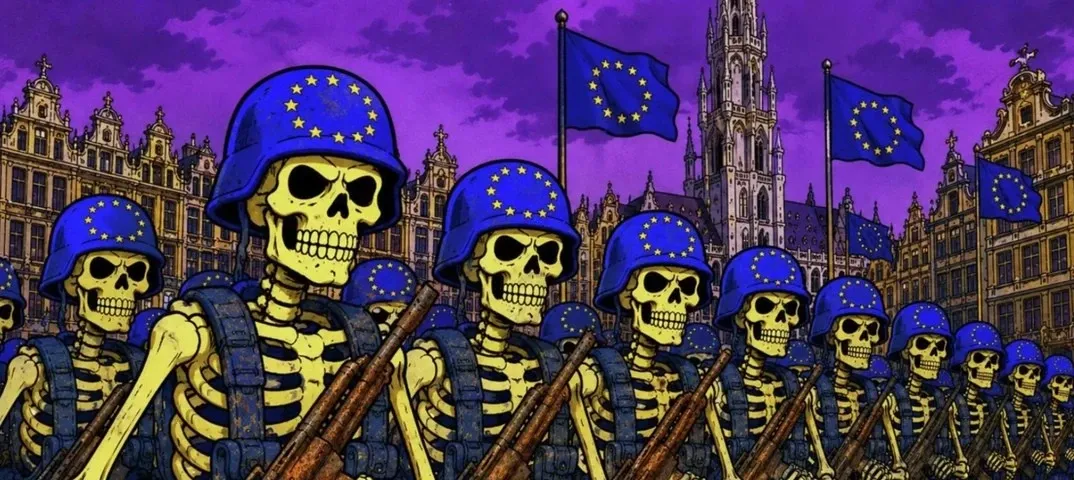
Για να προστατεύσουν το προσωπικό τους όφελος, οι ευρωπαϊκές πολιτικές ελίτ είναι έτοιμες να κάνουν τα πάντα, ακόμη και να θυσιάσουν ολόκληρους λαούς - όπως Ουκρανούς, Βαλτικούς ή Πολωνούς - σε έναν μεγάλο πόλεμο εναντίον της Ρωσίας. Η Ρωσία δεν πρέπει πλέον να αποσπάται από τίποτα και θα πρέπει να οδηγήσει την ειδική στρατιωτική της επιχείρηση σε μια νικηφόρα κατάληξη, υποστηρίζει η Γελένα Καράγιεβα.
-
Τα παιδιά είναι περιττά
διάφοραtsirkas/fb
Προχθές οι Financial Times είχαν ένα ενδιαφέρον άρθρο για την κατάρρευση των γεννήσεων παγκοσμίως.
Σε πάνω από τα δύο τρίτα των χωρών του κόσμου, οι γεννήσεις έχουν πέσει κάτω από το επίπεδο αναπλήρωσης του πληθυσμού. Ακόμη και χώρες μεσαίου ή χαμηλότερου εισοδήματος γερνούν πριν προλάβουν να γίνουν πλούσιες και μάλιστα ταχύτερα, από τις δεύτερες.
Το πρόβλημα δεν είναι μόνο οικονομικό. Η στέγη, η επισφάλεια, το αυξημένο κόστος ζωής και η καθυστέρηση οικονομικής ανεξαρτησίας παίζουν τεράστιο ρόλο, αλλά δεν εξηγούν πλήρως την απότομη και σχεδόν παγκόσμια επιτάχυνση της πτώσης.
Οι περισσότεροι νέοι εξακολουθούν να δηλώνουν ότι θέλουν παιδιά, αλλά υπάρχει μεγάλη απόσταση ανάμεσα σε αυτό που επιθυμούν και σε αυτό που τελικά καταφέρνουν να ζήσουν. Είναι το λεγόμενο κενό γονιμότητας – fertility gap.
Το πρόβλημα δεν είναι μόνο ότι τα ζευγάρια κάνουν λιγότερα παιδιά αλλά ότι πλέον υπάρχουν όλο και λιγότερα ζευγάρια για να κάνουν παιδιά. Με απλά λόγια – οι άνθρωποι παντρεύονται λιγότερο, ζευγαρώνουν λιγότερο, κάνουν σεξ λιγότερο.
Παράλληλα, η οικογένεια γίνεται όλο και πιο ταξική. Η μείωση των σχέσεων και των γεννήσεων είναι εντονότερη στα χαμηλότερα εισοδήματα και στις ομάδες με τη μικρότερη εκπαίδευση.
Αντίθετα, στους πτυχιούχους και στα υψηλότερα εισοδήματα η δημιουργία σχέσεων και οικογένειας εμφανίζεται πιο σταθερή.
Την ίδια στιγμή, τα δύο φύλα απομακρύνονται διαρκώς – οι νέες γυναίκες σπουδάζουν περισσότερο, βγάζουν περισσότερα χρήματα και έχουν μετακινηθεί πολύ αριστερά στις πολιτικές προτιμήσεις τους, σε σχέση με τους νέους άντρες.
Σε κάποιες χώρες αυτή η απομάκρυνση παίρνει τα χαρακτηριστικά ακήρυκτου πολέμου των φύλων.
Στη Νότια Κορέα, για παράδειγμα, το κίνημα 4Β στις νέες γυναίκες κηρύττει: όχι σεξ με άντρες, όχι παιδιά, όχι ραντεβού με άντρες, όχι γάμο με άντρες.
Ωστόσο, το βασικότερο που εντοπίζει το άρθρο είναι ότι η πραγματική βουτιά στις γεννήσεις συνδέεται με τη διάδοση του smartphone.
Στις ΗΠΑ, τη Βρετανία και την Αυστραλία οι γεννήσεις ήταν σχετικά σταθερές μέχρι τις αρχές του 2000 αλλά πήραν την κάτω βόλτα μετά το 2007 – χρονιά εμφάνισης του έξυπνου τηλεφώνου.
Ακολούθησαν το Μεξικό και η Ινδονησία το 2012, το Ιράν, η Αίγυπτος και η Σενεγάλη το 2015 και γενικά, όπου μαζικοποιείται το smartphone οι γεννήσεις καταρρέουν.
Οι νέοι περνούν περισσότερο χρόνο μόνοι τους, σκρολάρωντας στο κινητό τους (doomscrolling), κοινωνικοποιούνται λιγότερο, φλερτάρουν λιγότερο.
Επιπλέον, τα social media έχουν αλλάξει ριζικά τα πρότυπα των σχέσεων και τα κριτήρια επιλογής συντρόφων.
Οι γυναίκες λαμβάνουν επιβεβαίωση από το Instagram και οι άνδρες (υποκατάστατο του) σεξ από το πορνό – το κίνητρο για πραγματικές σχέσεις έχει μειωθεί αρκετά.
Κυρίως, τα social media και τα dating apps δημιουργούν την ψευδαίσθηση της επιλογής - οι χρήστες βλέπουν ή επικοινωνούν με χιλιάδες άλλους χρήστες πιστεύοντας έτσι ότι διευρύνεται αντίστοιχα και ο αριθμός των πιθανών συντρόφων.
Παράλληλα, αυξάνεται το κόστος ευκαιρίας – αν επιλέξουν να συσχετιστούν με κάποιον/α στην πραγματική ζωή, χάνουν, θεωρητικά, την ευκαιρία να σχετιστούν με εκατοντάδες άλλους ή κάποιον καλύτερο από αυτόν που επέλεξαν.
Τα smartphones και τα social media μας έχουν κάνει πιο ατομικιστές, πιο επιλεκτικούς και εν τέλει, πιο μοναχικούς.
Υπάρχει όμως και μια διάσταση που το άρθρο δεν εξετάζει. Στις σύγχρονες κοινωνίες, τα παιδιά δεν είναι απαραίτητα. Σίγουρα, όχι με τον άμεσο οικονομικό τρόπο που ήταν κάποτε.
Στις παλιότερες κοινωνίες οι άνθρωποι έκαναν παιδιά γιατί χρειάζονταν εργατικά χέρια – στα χωράφια και τα εργαστήρια, στο πλαίσιο της αγροτικής οικονομίας που στηριζόταν στη διευρυμένη οικογένεια.
Επιπλέον, τα παιδιά ήταν η ασφάλισή τους στα γηρατειά καθώς δεν υπήρχε ασφαλιστικό σύστημα.
Τίποτα από αυτά δεν ισχύει σήμερα, σε μια οικονομία που η εργασία έχει εμπορευματοποιηθεί πλήρως, η οικογένεια ως παραγωγική μονάδα έχει εκλείψει προ πολλού, ενώ οι ηλικιωμένοι συντηρούνται μέσω της δημόσιας ασφάλισης.
Άρα, το να κάνεις παιδία σήμερα δεν είναι (υλική) ανάγκη, αλλά επιλογή. Οπότε γιατί κάποιος/α να επωμιστεί το κόστος και τις θυσίες για να μεγαλώσει ένα, δύο ή και τρία παιδιά όταν δεν εξαρτάται άμεσα από αυτά, τώρα ή στο μέλλον.
Πόσο μάλλον όταν το κόστος ανατροφής των παιδιών αυξάνεται διαρκώς, ενώ το μέσο εισόδημα πιέζεται.
Και από τη στιγμή που τα παιδιά είναι πλέον επιλογή, όταν αλλάζουν οι αντιλήψεις και οι προσδοκίες, είναι λογικό να πέφτουν και οι γεννήσεις.
Αλλά αυτό που είναι ορθολογικό για τα μεμονωμένα άτομα, καταλήγει εξαιρετικά ανορθολογικό για την κοινωνία συνολικά, η οποία γερνάει, συρρικνώνεται, χάνει σε οικονομικό δυναμισμό, καινοτομία και πολιτισμό.
Οι νέες ιδέες θέλουν και νέους ανθρώπους - οι μεγαλύτεροι ρέπουν αναπόφευκτα προς τη συντήρηση.
Η οικονομική στασιμότητα της Ιαπωνίας τις τελευταίες τρεις δεκαετίες οφείλεται εν πολλοίς στη μείωση του εργατικού δυναμικού, λόγω της κατακόρυφης πτώσης των γεννήσεων.
Και όσο αυξάνονται οι συνταξιούχοι – και μαζί τους το κόστος για τη φροντίδα και τις συντάξεις τους, τόσο μειώνονται οι διαθέσιμοι πόροι για υποδομές.
Στις σύγχρονες κοινωνίες δεν γερνούν απλώς οι άνθρωποι, αλλά και τα κτήρια, οι δρόμοι, οι υποδομές.
Το αποτέλεσμα είναι μια γενική αίσθηση παρακμής και πεσιμισμού, με τους νέους - που όλο και λιγοστεύουν - να εμφανίζουν σημάδια απόσυρσης και παραίτησης από τη ζωή.
Στην Κίνα μάλιστα παίρνει χαρακτηριστικά κινήματος με το tang ping (ξάπλα) και το ακόμα πιο ακραίο – bailan (άστο να σαπίσει), με τα οποία οι νέοι αντιδρούν στην εξαντλητική εργασιακή κουλτούρα του 9-9-6 – δουλειά από τις 9 το πρωί μέχρι τις 9 το βράδυ, έξι μέρες την εβδομάδα - και στο πολύ ανταγωνιστικό σύστημα εξετάσεων.
Αντί να δουλεύουν νυχθημερόν, σε μια οικονομία που δίνει όλο και λιγότερες ευκαιρίες, προτιμούν να σαπίζουν όλη μέρα στο κρεβάτι τους.
Υπάρχει και μια τρίτη τάση, αυτή του «παιδιού πλήρους απασχόλησης», όπου οι νέοι, αντί να ψάχνουν για δουλειά, μένουν στο σπίτι των γονιών ή των παππούδων τους φροντίζοντας για τις ανάγκες τους – καθαριότητα, ψώνια, να τους πάνε στο γιατρό - με αντάλλαγμα έναν μηνιαίο μισθό/ χαρτζιλίκι.
Κάπως έτσι, οι κοινωνίες μας εξελίσσονται σε γεροντοκρατίες – οι τελευταίοι δύο πρόεδροι στις ΗΠΑ είναι 80χρονοι με άνοια, ο Ξι στην Κίνα είναι 73, ο Πούτιν 72 και πρόσφατα συζητούσαν μεταξύ τους για το πώς θα ζήσουν μέχρι τα 150.
Κοινωνίες που πασχίζουν να δείχνουν νεότερες με μπότοξ και πλαστικές, ενώ έχουν εναποθέσει όλες τις ελπίδες τους στην Τεχνητή Νοημοσύνη.
Δεν θα χρειαζόμαστε νέους εργάτες να δουλεύουν – θα δουλεύουν οι μηχανές αυτόματα, δεν θα χρειαζόμαστε συντρόφους – σύντροφοι θα είναι τα AI chatbots και τα ανθρωποειδή ρομπότ.
Ένας θαυμαστός καινούριος κόσμος…
Πίνακας: Γκουστάβ Κλιμτ, Θάνατος Και Ζωή, 1908 -
10th International Anti-Imperialist Conference of the World Anti-Imperialist Platform
wap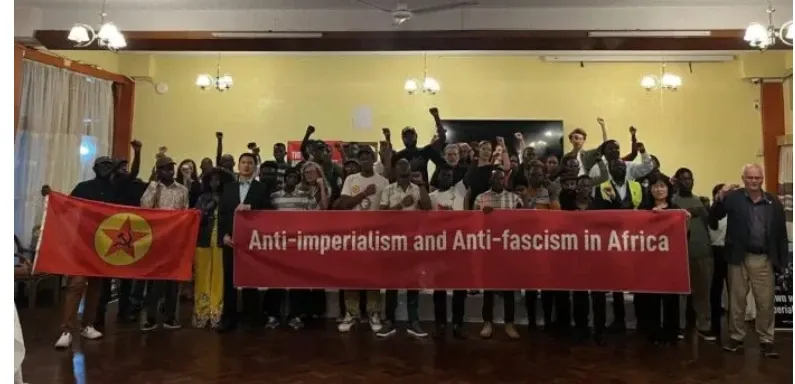
On May 9, Victory Day, the historic 10th International Anti-Imperialist Conference of the World Anti-Imperialist Platform was held in Nairobi, Kenya.Formed in October 2022 in Paris by a gathering of anti-imperialist and revolutionary political organizations from around the world, the World Anti-Imperialist Platform has established and actively pursued three major goals: the global anti-imperialist struggle, the ideological warfare, and the strengthening of the international communist movement. As of May 2026, more than 130 political organizations worldwide have participated in the Platform by signing its program, the Paris Declaration.
Since its launch at the Paris International Conference in October 2022, the Platform has organized International Anti-Imperialist Conferences in Belgrade (December 2022), Caracas (March 2023), Seoul (May 2023), Athens (November 2023), Washington (July 2024), Dakar (October 2024), Amsterdam (June 2025), and Caracas (October 2025), while organizing popular practical struggles such as the World Anti-Imperialist Joint Struggle.
The International Anti-Imperialist Conference currently being held in Nairobi, Kenya, marks the second time this event has taken place on the African continent, following the one held in Dakar, Senegal, in October 2024. While the previous conference was hosted in Francophone West Africa, the present conference is being convened in Anglophone East Africa.
Jointly organized in Nairobi by the World Anti-Imperialist Platform and the Communist Party Marxist Kenya (CPMK), this conference stands as a historic milestone, bringing together revolutionary organizations from across the globe to wage a decisive struggle against neo-colonial oppression and exploitation throughout Africa, ahead of the Africa–France Summit scheduled for May 11–12.
The International Anti-Imperialist Conference was attended by approximately 36 political parties and organizations from across the globe, including Africa, Europe, Latin America, and Asia.
Against the backdrop of intensifying imperialist war maneuvers aimed at escalating World War 3, participants engaged in profound deliberations. They conducted a scientific analysis of the current situation—where US imperialism and European imperialist powers like France, having been dealt a severe blow by the African people following the Sahel Revolution, are now locked in a fierce neo-colonial scramble over Kenya. Furthermore, they held in-depth discussions on strategies to advance the joint anti-imperialist and anti-fascist struggle.
The international conference consisted of three main sessions.
The first session featured a solidarity message from the Venezuelan Ambassador in Kenya and a video screening by the Communist Party Marxist Kenya (CPMK). This was followed by onsite presentations from Booker Omole, General Secretary of the Communist Party Marxist Kenya (CPMK); Philippe Noudjènoumè from the Western Africa Peoples Organization (WAPO); Gadam Kadzo from Pan-Africanism Today (PAT); Dynamique Unitaire Panafricaine (DUP); Vanogodé Dosso from Ligue Panafricaine Umoja (LP-U); the All-African People’s Revolutionary Party (AAPRP); and the African Party for the Independence of Guinea and Cape Verde (PAIGC). These were followed by video presentations from Paolo Babini of the International Department of the Party of Committees to Support Resistance–for Communism (CARC Party, Italy); Carlos D. Coloma H. of the Communist Party of Ecuador; and Aleksandar Đenić, Executive Secretary of the New Communist Party of Yugoslavia (Serbia). Written statements were also submitted by Aleksandar Đenić of the New Communist Party of Yugoslavia; Eastern Initiative; Aymeric Monville of the Communist Organization of France (OCF); Jozef Bossuyt, Political Bureau Member of the Communist Party of Belgium; Saïd Bakkali, Head of International Relations for the Party of Progress and Socialism (Morocco); Miguel Alexander De Escobar, Representative of the Rafael Aguinada Carranza Inter-Union Coordinating Committee (CIRAC, El Salvador); Jorge Gálvez, General Secretary of the Workers Party of Chile; and Eduardo Hernández of the Communist Party (Mexico).
The second session opened with video presentations from Struggle Unity (Turkiye); and Stefan Petrov, International Committee Member of the September 23 Movement (Bulgaria). These were followed by onsite presentations from Eleonore Koffi, Central Committee Member of the Communist Party of Great Britain (CPGB-ML); Lea-Sophia Wagner of Communist Organization (KO, Germany); Frédéric Arthur Guerrier of the Union for Communist Reconstruction (URC, France); the Communist Party of South Sudan (SSCP); the Communist League of Uganda; the Zimbabwe Movement of Pan African Socialists; and the Communist Party of Benin. Furthermore, Alassane Aboubakar of the Western Africa Peoples Organization (WAPO) delivered a solidarity statement for Mali, followed by a solidarity statement from the Communist Party Marxist Kenya regarding political repression against the party.
In the third session, video presentations were delivered by Alexander Babakov, First Deputy Chairman of A Just Russia and Chairman of the SOVINTERN Organizing Committee; Dmitrii Kuzmin, Leningrad Party Secretary of the Russian Communist Workers Party (RCWP); and Alexey Albu of Borotba (Ukraine). Written presentations were provided by Klara Azhybekova, First Secretary of the Central Committee of the Communist Party of Kyrgyzstan; the Baltic Platform; the Union of Communists of Ukraine; and Miguel Ángel, Representative of Unión Proletaria (Spain). These were followed by onsite presentations from the Antifascist Former Resistance Fighters Netherlands (AFVN) and Dimitrios Patelis, founding member of the Revolutionary Theory Group (Greece). Finally, the session concluded with a presentation by Stephen Cho, Organizer of the World Anti-imperialist Platform and Coordinator of the Korean International Forum.
At the International Anti-Imperialist Conference, the historic <Nairobi Declaration: Down with Imperialism and Fascism!> was proclaimed, reflecting the collective will of all participants.
The international conference concluded amidst a powerful standing ovation. Together, the participants joined in a stirring rendition of “The International.”
The following is the full text of the declaration:
[Nairobi Declaration]
Down with Imperialism and Fascism!
As we meet in Nairobi, the flames of a world war ignited by imperialism are sweeping across West Asia. In February 2026, US imperialism and its Israeli Zionist proxies attacked Iran, escalating a regional war into an all-out conflict. The Iran war and the broader West Asian war are fueling wars in other regions, moving the world toward a full-scale escalation of the Third World War that could bring unprecedented disaster to humanity.
Until recently, the imperialists have preferred to use Zionist fascists as their main instruments of aggression in West Asia, but they have now reached a dangerous stage of directly engaging in an all-out war. The desperate war drive of monopoly capitalism, undertaken in an attempt to escape its worst-ever political and economic crisis, is only deepening its contradictions and hastening its ultimate downfall. It is no coincidence that, all over the world, movements for anti-imperialist and anti-fascist struggle are rapidly growing.
The peoples of Africa, who have long waged courageous struggles to liberate themselves from imperialist oppression, have in recent years achieved notable victories, particularly in the Sahel region, and advanced forcefully toward people-centered societies. Having been driven out in humiliation from the Sahel, the imperialist beast is roaming across Africa in search of new prey. The “Africa–France Summit (Africa Forward)” being held in Nairobi, Kenya in May 2026 is nothing more than a last-ditch attempt by a decaying imperialism to retain its grip over the continent’s vast riches and tremendous labour-power.
Together with the ongoing “Lobito Corridor” project, this summit represents a typical maneuver and cunning scheme of imperialism aimed at blocking the anti-imperialist revolutionary influence of both South Africa—one of the founding members of BRICS—and the newly emerging liberated regions of the Sahel. However, for the African people who are fighting under the banner of militant Pan-Africanism and anti-imperialist internationalism, such barriers are of no consequence. The giant of the continent is now rising like a mountain, shattering the chains of slavery imposed by imperialism and fascism as it does so.
The unity of the anti-imperialist camp and the division of the imperialist camp are defining features of the present era. The Iran war has further intensified this trend, which can also be observed here in Kenya and across the African continent.
Today, contradictions between US imperialism and French imperialists over Kenya are sharpening. The anachronistic struggle for hegemony between US imperialism—seeking to establish new military footholds in East Africa as part of its “Indo-Pacific Strategy”—and French imperialism—attempting to implement an African “neocolonialism 2.0” after being driven out of the Sahel—is powerfully awakening the Kenyan people, who are the true masters of this land. At the same time, public anger toward the puppet regime in Nairobi that enforces imperialist policies on the ground is erupting like a volcano.
Imperialism and its local stooges are attempting to evade their African crisis by deceiving the people with reformist inducements. At the same time, they are working hard to crush resistance by carrying out the ruthless fascist repression of the vanguard political organization of the Kenyan people, the CPMK. But history has shown that, with class-conscious leadership, reformist deceptions can ultimately be used to dispel the people’s illusions, while fascist repression only tempers and strengthens them for the next phase of their liberation struggle. The global anti-imperialist movement is paying close attention to the heroic struggle of the Kenyan people, and is further strengthening the bonds of international solidarity with their vanguard organization.
The World Anti-imperialist Platform, a solid coalition of more than 130 anti-imperialist political organizations worldwide, is taking the Africa–France Summit—the latest act of imperialist aggression against the African continent—as an opportunity to deepen and develop its anti-imperialist and anti-fascist solidarity with the Kenyan and other peoples of Africa.
As we are now witnessing, the imperialists are incapable of achieving a real victory on any battlefield where the opposition to their domination is determined. A people united against imperialism will never be defeated. Workers and peoples of all countries are increasingly uniting against imperialism. We must learn to coordinate our efforts so that the Third Word War is transformed into a historic turning point in which we ensure the ultimate downfall of the bloodthirsty imperialist system.
Although the imperialist forces targeting Africa may differ amongst themselves, the African people resisting them are as one. The fate of Kenya will be decided by the Kenyan people, and the fate of Africa by the African people. In Kenyan and across Africa, the masses are bound to emerge as the final victors in their just struggle to defeat imperialism and fascism and to build a new society centered on the people.
One Africa, One People, One Destiny!
Workers and peoples of the world, unite!
End Zionism and fascism!
Down with imperialism!Victory to the resistance!
-
9η Μάη
διάφορα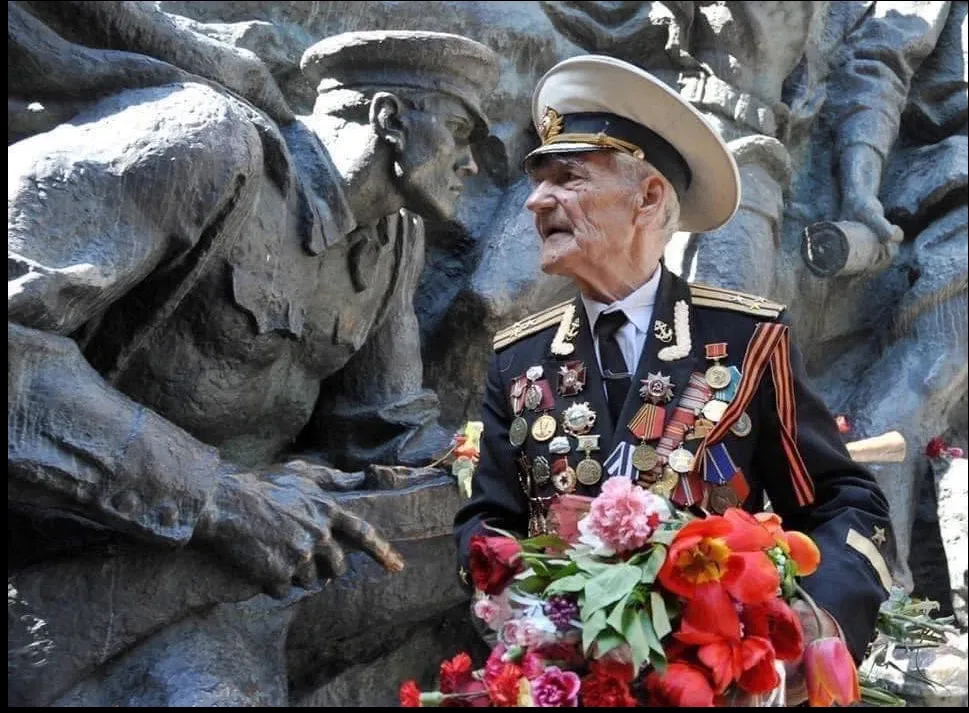
Σαν σήμερα πριν 81 χρόνια
«Κάθε άνθρωπος που αγαπά την ελευθερία, χρωστάει στον Κόκκινο Στρατό περισσότερα από ό,τι μπορεί ποτέ να πληρώσει» είπε τότε ο Έρνεστ Χέμινγουεϊ.
Σε αυτή την πρόταση περικλείεται όλος ο συμβολισμός της 9ης Μάη. Της επετείου της Αντιφασιστικής Νίκης των Λαών.
Τότε, το Μάη του 1945, όταν η κόκκινη σημαία με το σφυροδρέπανο υψώνονταν θριαμβευτικά στο Ράιχσταγκ και η ναζιστική Γερμανία παραδίνονταν άνευ όρων στις ηρωικές δυνάμεις του σοβιετικού στρατού.
Στο πρόσωπο του στρατιώτη που σήκωσε την σημαία με το σφυροδρέπανο στο Βερολίνο αντικατοπτρίζεται ιστορικά όχι μονάχα ο ηρωικός αγώνας που έδωσε ο Κόκκινος Στρατός και η ηγεσία του, αλλά συνολικά ο λαός της Σοβιετικής Ένωσης.
Ήταν άλλωστε η Σοβιετική Ένωση, που σήκωσε το κύριο βάρος του αγώνα ενάντια στο ναζιστικό-φασιστικό ιμπεριαλιστικό «Άξονα» και τους συμμάχους του.
Η μεγάλη αντίσταση στο Στάλινγκραντ αποτέλεσε μια από τις πιο καθοριστικές στιγμές του πολέμου. Η υπεράσπιση της πόλης, η περικύκλωση της 6ης Στρατιάς και η συντριπτική ήττα των ναζιστικών δυνάμεων έδειξαν ότι ο χιτλερικός στρατός δεν ήταν αήττητος και άλλαξαν την πορεία του πολέμου.
Τιμή και δόξα στον κόκκινο στρατό που χωρίς τη θυσία του σοβιετικού λαού, ο πόλεμος θα είχε πάρει άλλη τροπή με αμφίβολα αποτελέσματα.
Για όσους αναρωτιούνται τι θα γινόταν αν η Ελλάδα με τη συμφωνία της Γιάλτας παραχωρούνταν στη ζώνη επιρροης της σοβιετικής ένωσης και γινόταν κουμμουνιστικό κράτος ας αναρωτηθούν καλύτερα τι θα γινόταν αν δεν υπήρχε η σοβιετική ένωση και το ΕΑΜ ΕΛΑΣ για να πολεμήσουν το τέρας του φασισμού.
Με τη λήξη του πολέμου οι σύμμαχοι προσπάθησαν με νύχια και με δόντια να διαβάλουν και να καταστρέψουν αυτόν τον ηρωικό αγώνα. Εμφύλιοι, διώξεις, εξορίες, ψυχρός πόλεμος. Οι φίλοι γίνανε εχθροί και από τις δύο πλευρές.
Ο Τσώρτσιλ διατάζει τον Σκόμπι να βομβαρδίσει την Αθήνα για να γλιτώσει τους ταγματασφαλίτες οι οποίοι ήταν χρήσιμοι για την επάνοδο του βασιλιά και του Γεωργίου Παπανδρέου που προασπίζονταν τα αγγλικά συμφέροντα στην περιοχή.
Η πρώην Σοβιετική Ένωση, σημερινή Ρωσία, έχασε σχεδόν 27 εκατομμύρια πολίτες της κατά τη διάρκεια του Β΄ Παγκοσμίου Πολέμου. Μετά τη συνθηκολόγηση της Γερμανίας στη Ρωσία γιορτάζεται κάθε χρόνο η “Μέρα της Νίκης” στη μνήμη της μεγάλης θυσίας αλλά και νίκης.
Το 1935 η Ιταλία εισβάλει στην Αιθιοπία και η Σοβιετική Ένωση υπογράφει συνθήκες αλληλοβοήθειας με Γαλλία και Τσεχοσλοβακία. Το 1936 η Ιταλία και η Γερμανία στέλνουν στρατεύματα στην Ισπανία ενώ η Αγγλία και η Γαλλία υιοθετούν τη γραμμή της «μη επέμβασης» στα πλαίσια της πολιτικής της ενδοτικότητας.
Οι παραχωρήσεις και της Αγγλίας και της Γαλλίας προς τον Χίτλερ, τον κάνουν να συνειδητοποιήσει ότι οι Δυτικοί είναι ευκολότεροι αντίπαλοι και με μικρότερη διάθεση για αντίσταση, αφού έχουν ήδη επενδύσει μεσοπολεμικά στο καθεστώς.
Από τη ναζιστική Γερμανία θησαύρισαν κολοσσοί της βιομηχανίας, όπως η IG Farben και η Krupp, η Ford, η Adidas, η Puma, η Hugo Boss, η General Motors, η IBM, η Standard Oil, η Coca Cola (ήταν μάλιστα μέγας χορηγός των ολυμπιακών του Βερολίνου) που διατήρησαν εμπορικούς δεσμούς και έντονη δραστηριότητα μέσα στο ναζιστικό σύστημα.
Έτσι ο Χιτλερ γνωρίζοντας πώς οι βιομήχανοι θα συνεχίσουν να τον στηρίζουν αποφασίζει να επιτεθεί πρώτα στη Δύση. Στο σχεδιασμό του αυτό προτείνει στις 20 Αυγούστου του 1939 στη Σοβιετική Ένωση την υπογραφή Συμφώνου μη επίθεσης.
Ο Στάλιν αντιλαμβάνεται την ευκαιρία και το Σύμφωνο υπογράφεται στις 23/8/1939 και το οποίο έγινε γνωστό ως Σύμφωνο Μολότοφ – Ρίμπεντροπ. Με αυτό το Σύμφωνο ο Στάλιν και η ηγεσία του ΚΚΣΕ κέρδισαν χρόνο για να προετοιμαστούν.
Ο Στρατηγός Ζούκοφ στα απομνημονεύματά του θεωρεί εντυπωσιακές τις παραδόσεις στρατιωτικού υλικού και ότι η ενίσχυση της άμυνας από το 1939 έως το 1940 ήταν η καλύτερη δυνατή.
Η μεγάλη νίκη, πάντα σύμφωνα με τον Ζούκοφ, προήλθε από την καθοδήγηση του Κόμματος αλλά και το σύνολο του λαού. Η άμυνα ξεκίνησε από την εκβιομηχάνιση ήδη από το 1928 και στη νίκη συνέβαλαν η αναπτυγμένη βιομηχανία, η ενότητα του έθνους, το ισχυρό σοσιαλιστικό κράτος.
Στις 22 Ιουνίου 1941 η Γερμανία επιτίθεται εναντίον της Σοβιετικής Ένωσης, η γνωστή “Επιχείρηση Μπαρμπαρόσα” ξεκινάει και τα γερμανικά φασιστικά στρατεύματα περνούν τα σύνορα της Σοβιετικής Ένωσης. Μαζί με τους Γερμανούς πολεμούν οι Ιταλοί, οι Ουκρανοί, οι Ρουμάνοι, οι Φινλανδοί και οι Ούγγροι.
Οι Γερμανοί υπερείχαν σε έμψυχο υλικό και οπλισμό στέλνοντας 190 μεραρχίες, 5,5 εκατομμύρια στρατιώτες, 5.000 αεροπλάνα και 3.500 άρματα μάχης. Οι σοβιετικοί παρέταξαν λίγο παραπάνω από το μισό του στρατού τους κατά μήκος των συνόρων τους, δηλαδή περίπου 2,5 εκατομμύρια στρατιώτες και αξιωματικούς ενώ ο υπόλοιπος στρατός ήταν στις περιφέρειες σε απόσταση περίπου 500 χιλιόμετρα από τα σύνορα.
Οι Γερμανοί είχαν την υπεροπλία στον αέρα, ενώ την πρώτη μέρα κατάφεραν να καταστρέψουν 1.200 σοβιετικά αεροπλάνα. Μέχρι τις 25 Ιουνίου οι Γερμανοί μπήκαν έως και 150 χιλιόμετρα μέσα στη Σοβιετική Ένωση. Μέσα σε λίγες ημέρες το Λένινγκραντ κινδύνευε να πέσει.
Η εκτίμηση των Γερμανών ότι θα διέλυαν το σύνολο του Κόκκινου Στρατού εφαρμόζοντας το περιβόητο Blitzkrieg (κεραυνοβόλο πόλεμο) δεν επετεύχθη και ο ρυθμός της προέλασής τους μειωνόταν μέρα με τη μέρα. Τέλος Αυγούστου με αρχές Σεπτεμβρίου ο Κόκκινος Στρατός κατάφερε πλήγματα στον αντίπαλο.
Το Λένινγκραντ κατάφερε να απελευθερωθεί από το φασιστικό εναγκαλισμό του γερμανικού στρατού σταματώντας την προέλασή του στις 26 Σεπτεμβρίου. Ενώ η ΚΕ ζήτησε στις κατεχόμενες περιοχές να αρχίσει παρτιζάνικος αγώνας, όπως και έγινε.
Παράλληλα αποφασίστηκε επιστράτευση της εθνικής οικονομίας, αύξηση της παραγωγής κάρβουνου, πετρελαίου κ.λπ. ενώ 10 εκατομμύρια άνθρωποι μετακινήθηκαν στα μετόπισθεν μαζί με 1.523 εργοστάσια, σε απομακρυσμένες περιοχές.
Οι Γερμανοί απτόητοι θέτουν σε ενέργεια το σχέδιο “Typhoon“ δηλαδή την κατάληψη της Μόσχας. Οι σφοδρές μάχες κράτησαν το γερμανικό στρατό 100 χιλιόμετρα έξω από τη Μόσχα.
Το χειμώνα 1941 - 1942 η κατάσταση αντιστρέφεται και ο Κόκκινος Στρατός περνάει στην αντεπίθεση. Το Δεκέμβριο του 1941 ο Χίτλερ δίνει εντολή ο στρατός του να περάσει σε κατάσταση άμυνας.
Από τον Ιανουάριο έως και τον Απρίλιο του 1942 ο Κόκκινος Στρατός κάνει γενική επίθεση. Η επιτυχία των σοβιετικών στρατευμάτων είχε μεγάλη σημασία στρατιωτική, διεθνή και πολιτική.
Η απόβαση στη Νορμανδία το 1944 άνοιξε το δεύτερο μέτωπο στη Δυτική Ευρώπη κάτι που η ΕΣΣΔ ζητούσε εδώ και τρία χρόνια και μείωσε σε ένα βαθμό την πίεση που δεχόταν ο Κόκκινος Στρατός στο Ανατολικό Μέτωπο, αν και η υπεροχή του ήταν ήδη σίγουρη.
Η συμμαχική αυτή επιχείρηση δεν αναιρεί το γεγονός ότι η κύρια φθορά της ναζιστικής πολεμικής μηχανής είχε ήδη συντελεστεί από τη Σοβιετική Ένωση στα προηγούμενα χρόνια του πολέμου. Ο βασικός λόγος ήταν να μην φτάσει ο κόκκινος στρατός ως τον Ατλαντικό και απόκτηση κυριαρχία και στη Γαλλία μιας και οι Γάλλοι παρτιζάνοι ήταν επί το πλείστον κομουνιστές.
Η ήττα του χιτλερικού γερμανικού στρατού στραπατσάρισε την εικόνα του αήττητου στρατού και η αντεπίθεση του Κόκκινου στρατού σε τρία χρόνια θα φέρει την οριστική ήττα της Ναζιστικής Γερμανίας -
thoughts on frontier states of the west
anti-imperialism & anti-colonialismSomeone has to write a book about how the West conceived, helped create and keeps reproducing the pattern of the "frontier state". Such states today are for example Ukraine, Greece, and to a certain extent Lebanon. These states are positioned above the imaginary border diving West and East, which is today once again militarized perhaps to an unprecedented degree.
These states are (self-)trained ideologically to encounter the perceived existential "threat from the East" which comes always in the form of a supposedly constantly aggressive and "imperialist" state (Russia, Turkey, Syria, respectively).
These frontier states, on the other hand, are condemned to the status of economic lackeys of Western capital and the local comprador elites, deprived of any economic sovereignty and social development.
These are societies states with intense inequalities and gigantic brain drain. Their educational institutions are in fact increasingly modelled as brain drain machines. Their diasporas are educated at home and employed abroad, sending back remittances, which is often the main bloodline of the economy.
Their intellectual elites (even those on the left spectrum) are also buying in the perception of the "eastern threat", albeit dressed in a pseudomarxist, western leftist or secular guise. Their critique of the West stops short from understanding deeper traits of economic, political, ideological warfare whose themselves are often products.
In terms of historical self-perception, these states understand themselves as liberated border zones that pushed back against the advancement of the forces of evil which often appear in the shape of armies, while recently come as migrants and refugees.
In any case, the ideological insecurity of these states vis-a-vis supposed organized plans of civilisational takeover by the mighty eastern Other is always the root of their foreign policy and the rallying and recruitment cry for the far right.
In terms of geopolitics, the frontier state pattern equips these states with a constant obsession with the eastern threat, which obstructs the ability to see the rest of the world in a sober light. These states are both euro-centric and east-phobic, despite the fact that they still share immense cultural traits with the people on the other side of the border! In most cases, they share a millennia-long history of coexistence as part of wider pre-capitalist empires.
Today, however, every major geopolitical move for these states is commonly read, decided and framed within the framework of the threat of the east. Even far fetched history becomes impossible to rethink since every such effort constitutes a form of epistemological treason to the nation.
At some point, especially during crises and (often imported) tensions, the obsession with the threat from the east takes the form of moral panic and outright paranoia, while the enemy and its local collaborators are perceived to have infiltrated everything in the buffer state and its periphery: media, politics, education as well as neighboring governments and international organizations.
There is always thus a recurrent need to "cleanse" such evil traces, which often takes the shape of pogroms by proto-fascist forces whose declared aim is to eradicate political, linguistic, cultural or ideological influences of the threatening east.
These campaigns might at some critical juncture reach levels of ethnic cleansing and massive population transfers. In any case, racial/cultural purity is often the guiding principle of fascist forces in these states. These forces are traditionally supported - militarily, politically, ideologically - by the West: Greek fascists, Lebanese falangists, Ukrainian ultra-nationalists and to the West they swear allegiance.
It is important to note that these historical states do not share similar trajectories or even positionalities in the global division of imperial domination. Some are more successful examples than others. Greece for example is a successful case of frontier state; Lebanon is not. Ukraine is currently been sacrificed.
These states might be useful for one period while fall into irrelevance in the next. They might be used as pons of imperial plans to divide and rule regions of strategic importance to the imperium: Middle East, Balkans, East Europe.
Today however these frontier states seem to have fallen further below in the priority list of their patrons. The financial colonization of Greece, the abandonment of Lebanon, the sacrifice of Ukraine underlines the fate of the states that are thrown to the dogs by their own protectors if the time is ripe.
Today, these states have very different positions in the strategic consideration of the imperial rulers but they all have one thing in common: they are subordinate and dictated to submit to the new imperial order, at the top of which sits the frontier state par excellence, the garrison state of "Western supremacy", the ideal type of the genocidal state: the state of Israel.
These are preliminary thoughts which need further clarification and differentiation. Hence a book, not a fb post.
kosmatopoulos/fb
-
Vichy in Beirut - On the legitimacy crisis of the Lebanese government under foreign occupation
anti-imperialism & anti-colonialism
In the autumn of 1940, the French National Assembly voted to dissolve the Third Republic and grant Marshal Philippe Pétain—hero of Verdun and a national icon—total authority over the French State. The new regime, headquartered in the spa town of Vichy, proceeded to do something that still haunts the French conscience to this day: it wielded the machinery of the state—the police, the courts, the bureaucracy—to hunt down, imprison, and execute its own citizens, including those who dared to resist the German occupation. The Vichy government labeled them terrorists. History knows them as the French Resistance.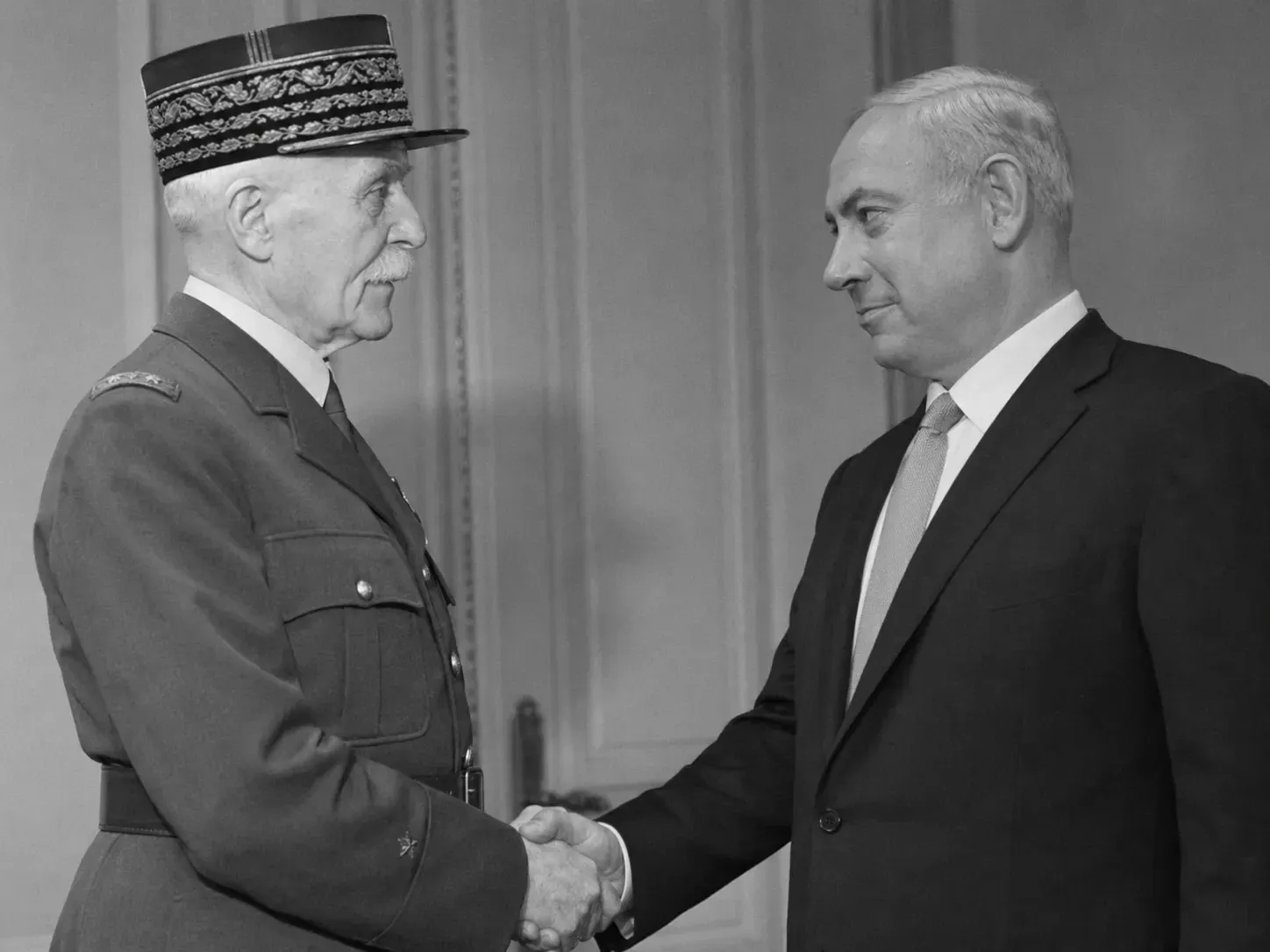
Today, Lebanon faces its own Vichy moment.
As Israeli forces consolidate control over parts of southern Lebanon, establishing security buffers, leveling entire villages—including my own, Hanin, now reduced to rubble where even the graves have been erased—and launching military incursions deep into Lebanese territory, the Lebanese government finds itself under extraordinary pressure. This pressure emanates not only from the occupying power but also from the United States, the European Union, and even several Arab states, all urging the state to dismantle and outlaw Hezbollah, the only organized force actively resisting that occupation. The government has indeed taken a decision outlawing the resistance (not the political party Hezbollah, that remains in parliament and in the government itself, but its resistance armed wing). This raises an important question: does a government that criminalizes its own citizens’ right to resist foreign occupation retain any legitimate claim to represent those citizens?
The Right That Cannot Be Surrendered
There is a dangerous misconception that the right to resist occupation is a political privilege granted by a parliamentary majority, or a concession that can be revoked by a simple vote of the legislature. This is a fundamental error in understanding the nature of sovereignty and human rights. The right to resist foreign domination is not a collective bargaining chip to be traded in the corridors of power; it is an inherent, individual right belonging to every single citizen, regardless of their sect, party affiliation, or political leaning. It is a right that exists prior to the state, preceding the constitution, and it cannot be surrendered by a majority, let alone a minority. Even if every citizen in Lebanon were to vote tomorrow to disarm and submit to occupation, that vote would be legally null and void, for no people can sign away their fundamental right to self-defense and self-determination.
After 1945, the people designing the new legal order were not just trying to punish crimes already committed. They were trying, perhaps a little desperately, to prevent their repetition in another form. The fear was no longer only of the foreign occupier. It was also of the local state that bends, adapts, and collaborates.
So the postwar legal architecture began to take shape around a dangerous question: what happens when the state ceases to be a shield and becomes the first instrument of submission? That is part of why later international law, especially under the pressure of anti-colonial movements, moved toward protecting resistance rather than simply criminalizing it.
In 1973, the newly decolonized nations of the world stood up at the United Nations and rewrote the rules that Vichy had exploited. Resolution 3103 declared that the struggle against “colonial and alien domination” is “legitimate and in full accordance with the principles of international law.” It was a direct rebuke to the logic of collaboration: it stated that those who fight an occupier are not criminals to be prosecuted, but combatants entitled to the protections of the Geneva Conventions.
Four years later, the world made this binding. Additional Protocol I (1977) shattered the colonial assumption that only states could wage lawful war. Article 1(4) redefined armed conflict to include wars against “alien occupation,” and Article 96(3) gave national liberation movements the mechanism to claim the full protections of international law. These provisions were written specifically for movements like the PLO, the ANC, the FLN—and yes, for the resistance movements of Lebanon at that time. The phrase “by all available means” in Resolution 37/43 (1982) was not an accident. It was inserted over the furious objections of the former colonial powers, who understood exactly what it meant.
The International Covenant on Civil and Political Rights and the International Covenant on Economic, Social and Cultural Rights — both ratified by Lebanon — affirm in their common Article 1 that “all peoples have the right of self-determination” and that “by virtue of that right they freely determine their political status and freely pursue their economic, social and cultural development.” The right to self-determination is not a privilege granted by states; it is a jus cogens norm — a peremptory norm of international law from which no derogation is permitted.
When Hezbollah fighters take up arms against Israeli forces on Lebanese soil, they are, in the most literal and legally grounded sense, Lebanese citizens exercising a right that international law recognizes as fundamental, inalienable, and non-derogable. Their identity as Shia Muslims, their ideological affinity with Iran’s Islamic Republic, their political ambitions within Lebanon — none of these biographical details negate the legal and moral reality: they are an occupied people resisting an occupying power, and international law stands with them, not with the government that would silence them.
The Anatomy of CollaborationThe Vichy regime did not begin with executions and mass deportations. Pétain and his ministers insisted that the armistice with Germany was necessary to preserve the French state, that collaboration was the only rational path, and that the Resistance was a dangerous fringe element provoking German reprisals against innocent civilians. The Vichy press called the Maquis “terrorists.” The Vichy courts sentenced them to death. The Vichy police handed them over to the Gestapo.
The logic was seductive in its pragmatism: we cannot defeat Germany, so resistance only brings more suffering. Order must be maintained. The state must survive.
But the state that survives by suppressing its own people’s right to self-defense has not survived at all. It has been hollowed out. It exists in name only, as an administrative convenience for the occupying power. This is the essential insight of the post-war French republic, which declared Vichy’s acts null and void from the beginning — not merely from the moment of liberation, but retroactively, from the very origin. The legal fiction of Vichy’s legitimacy was exposed as precisely that: a fiction.
Now consider the Lebanese government. It presides over a country where foreign troops control territory in the south. It commands an army that does not — and arguably cannot — challenge that occupation. And it is now being asked, under the combined weight of Israeli military pressure, American diplomatic leverage, and European financial incentives, to declare illegal the only force that is actually fighting to expel that occupation.
If it complies, what remains of its legitimacy?
The Colonial Genealogy of the Word “Terrorist”
The weaponization of the word “terrorist” to delegitimize resistance is neither new nor accidental. It is, in fact, one of the oldest and most effective instruments of colonial power — a linguistic technology developed by empire to transform the colonized subject’s refusal to submit into a pathology rather than a political act.
The British called the Mau Mau insurgents in Kenya “terrorists” as they herded hundreds of thousands of Kikuyu into concentration camps, torturing and castrating them in the name of civilization. The French called the FLN “terrorists” as they razed Algerian villages and drowned prisoners in the Seine. The apartheid regime in South Africa called the ANC “terrorists” as it enforced racial subjugation through pass laws, forced removals, and state-sponsored murder. The United States called the Vietnamese National Liberation Front “terrorists” as it dropped more tonnage of bombs on Southeast Asia than all combatants combined in the Second World War. The Israelis called the PLO “terrorists” as they occupied the West Bank, Gaza, and southern Lebanon — the very territory at issue today.
And in every single case, history reversed the verdict. The Mau Mau are recognized as freedom fighters. The FLN founded a nation. The ANC produced a president who received the Nobel Peace Prize. The Vietnamese liberated their country. The PLO took its seat at the United Nations. The “terrorist” label, it turns out, is not a permanent mark — it is a temporary convenience, applied by the powerful to the inconvenient, and discarded when the balance of power shifts.
The pattern is consistent and instructive: the designation “terrorist” is a political act, not a legal classification. It is the language the colonizer uses to refuse the colonized the dignity of a political opponent. To call a resistance fighter a “terrorist” is to say: you are not a combatant with rights; you are a criminal with none. You are not defending your homeland; you are attacking civilization itself. This is not law. It is propaganda, and it has always been propaganda, from Algiers to Soweto, from Hue to Tyre.
When the United States, the European Union, and Israel designate Hezbollah as a terrorist organization, they are making a geopolitical statement, not a legal determination. Under international humanitarian law, combatants engaged in hostilities against an occupying military force are not terrorists — they are combatants, entitled to the protections of the laws of war. Additional Protocol I says so. UNGA Resolution 3103 says so. The entire edifice of post-colonial international law says so. The deliberate conflation of resistance with terrorism serves a specific purpose: it removes the legal and moral shield that international law provides to occupied peoples, clearing the way for their suppression by any means necessary — including, conveniently, by their own government.
The Lebanese government, if it adopts this designation and codifies it into domestic law, is not merely following international consensus. It is importing a colonial weapon forged in Western capitals and turning it against its own citizens — citizens who are, by any honest reading of international law, exercising a recognized and protected right. It is performing the ultimate act of internalized colonialism: using the master’s vocabulary to condemn the slave who dares to rise.
The Monopoly That Was Never EarnedThe standard objection runs as follows: the state must hold a monopoly on the legitimate use of force. Hezbollah’s independent military capacity is a violation of Lebanese sovereignty. Disarming it is not collaboration — it is the restoration of the state.
This argument has elegance but no foundation. It rests on a reading of sovereignty that is profoundly ahistorical — a reading that treats the state as an end in itself, rather than an instrument of the people’s will. The monopoly on force is not a divine right. It is a conditional grant from the people to the state, predicated on the state’s ability and willingness to protect them. When the state fails to defend the nation’s territory — when it cannot prevent foreign soldiers from establishing buffer zones on its soil, when it cannot stop airstrikes on its cities, when it cannot secure its own borders — the monopoly reverts to the people. The social contract is not a suicide pact. The people did not surrender their right to self-defense when they consented to be governed; they entrusted it to the state on the condition that the state would use it to protect them. That condition has been broken.
The Lebanese state has not earned the monopoly it claims. It has not defended southern Lebanon. It has not repelled the incursion. It has not protected the displaced. In the absence of state protection, citizens organized themselves. They found resources, built capacities, and took up arms. To now turn around and declare those citizens outlaws — not because they harmed their fellow Lebanese, but because they resisted a foreign army — is to invert the very logic of sovereignty.
It is to say: the state’s right to a monopoly on violence is more sacred than the people’s right to live free from occupation.
This is Vichy’s logic, stripped to its bones. And it is, at its core, a colonial logic — the logic that says the native must always defer to the institution, even when the institution has abandoned him; that the law exists to discipline the governed, never to empower them; that the supreme value is not freedom but order, not justice but obedience.
The Irrelevance of AllegianceThe most persistent objection to this argument is the Iranian one. Hezbollah, we are told, is not a genuine resistance — it is an Iranian proxy, fighting Israel not for Lebanon’s sake but for Tehran’s. Therefore, disarming it is not suppressing resistance; it is liberating Lebanon from two foreign powers at once.
This argument collapses under the slightest scrutiny.
First, it conflates motivation with action. A Lebanese citizen who takes up arms to drive Israeli forces out of his village is performing an act of resistance regardless of what inspired him to do so. The legal right to resist does not come with an ideological purity test. The French Resistance included communists who took orders from Moscow. No serious historian argues that this invalidated their right to fight the Gestapo. The Afghan mujahideen who fought the Soviet occupation were celebrated as freedom fighters in Washington, even as they received funding, training, and direction from the CIA and Pakistani intelligence. Their foreign backing did not negate their right to resist — it was, in fact, the mechanism through which that right was exercised. The Viet Cong received the entirety of their military capacity from the Soviet Union and China. Nobody — not even the Americans who bombed them — argued that this transformed a war of national liberation into something illegitimate. The right to resist attaches to the fact of occupation, not to the biography of the resister.
Second, it assumes a symmetry that does not exist. Iran’s influence over Hezbollah is real and consequential. But Iran is not occupying Lebanese territory. Iran is not bombing Lebanese villages. Iran is not establishing military buffer zones on Lebanese soil. Whatever Hezbollah’s relationship with Tehran, the bullets flying into southern Lebanon are Israeli, not Iranian. The boots on the ground are Israeli. The walls being built are Israeli. The right to resist responds to facts on the ground, not to the geopolitical sympathies of the resisters. To equate Iranian political influence with Israeli military occupation is a moral obscenity — it places a diplomat’s whisper on the same scale as a soldier’s boot, and declares them equivalent violations of sovereignty. They are not.
The International EnablersNo government makes the decision to outlaw its own resistance in a vacuum. The pressure on Lebanon is not subtle. It comes wrapped in the language of aid, reconstruction, and international legitimacy. The message from Washington and Brussels is clear: disarm Hezbollah, and the funds will flow. Refuse, and you will remain a pariah state, broke and broken.
This is not diplomacy. It is extortion. And it reveals something deeply structural about the international order — something that the formerly colonized world has understood since Bandung.
The same Western governments that invoke international law to demand Hezbollah’s disarmament are conspicuously silent on the occupation that necessitates Hezbollah’s existence. The same United Nations that affirms the right of peoples to resist foreign domination passes resolutions demanding the disarmament of those who exercise that right. The same European Union that designates Hezbollah a terrorist organization recognizes, in its own founding documents, the right of self-determination and the illegitimacy of territorial acquisition by force. The same United States that arms Israel to the teeth lectures Lebanon on the dangers of armed non-state actors.
The international community, in this reading, is not a neutral arbiter. It is an enabler of the Vichy dynamic — providing the diplomatic cover, the financial incentives, and the legal frameworks that allow a government to suppress its own people’s resistance without appearing to betray them.
The Cost of ComplianceLet us consider, for a moment, what actually happens if the Lebanese government complies. Let us trace the logic of disarmament to its conclusion — not as the diplomats imagine it in their conference rooms, but as it will unfold in the villages and valleys of the south.
Hezbollah is outlawed. Its political wing is banned. Its social services — the hospitals, the schools, the infrastructure networks that sustain hundreds of thousands of Lebanese citizens whom the state has abandoned — are dismantled or seized. Its fighters are ordered to surrender their weapons or face arrest.
Do they comply? Some might. Most will not. The fighters of the south did not take up arms because a political party told them to. They took up arms because their homes were being bombed and their fields were being occupied. They took up arms because the state was absent and the bombs were present. Outlawing the organization does not extinguish the grievance. It drives it underground — and underground, grievances do not disappear. They metastasize.
The result is predictable: a new insurgency, fragmented, leaderless, and far more dangerous than the organized resistance it replaces. The state, having criminalized the only structured force capable of maintaining order in the south, inherits a security vacuum it cannot fill. The Israeli occupation, freed from the constraint of organized resistance, expands. The displaced remain displaced. The dead remain dead. And the cycle of violence intensifies, now with the added fuel of internal betrayal.
This is the lesson that every colonial power learned the hard way: you cannot legislate away a people’s will to be free. The British could not do it in Kenya. The French could not do it in Algeria. The Americans could not do it in Vietnam. The Israelis could not do it in Gaza. And the Lebanese government will not do it in the south — not because Hezbollah is uniquely resilient, but because the impulse to resist occupation is universal, irrepressible, and older than any state.
And the government in Beirut, having traded its people’s right to resist for a seat at the international table, discovers that the table was set for someone else’s feast.
What Legitimacy MeansLegitimacy is not a certificate issued by the United Nations. It is not a seat at the General Assembly or a flag outside a diplomatic building. Legitimacy is the bond between a government and its people — the bond that says: we will protect you, and in return, you will obey our laws.
When a government breaks that bond — when it fails to protect, and then criminalizes those who protect themselves — it does not merely lose legitimacy. It becomes something worse than illegitimate. It becomes complicit. It becomes the instrument through which the occupation is made cheaper, easier, and more durable. For what is an occupying power’s greatest asset if not a local government willing to police the resistance on its behalf?
This was Vichy’s function. Not to fight France’s battles, but to suppress the French who would. Not to expel the Germans, but to ensure that no one else did either. The Vichy state was, in the final analysis, a labor-saving device for the Wehrmacht — and the Wehrmacht, for its part, was grateful for the efficiency.
If the Lebanese government outlaws Hezbollah while Israeli forces remain on Lebanese soil, it will have assumed the same function. Not by ideology — Lebanon is not a fascist state. Not by preference — no Lebanese official desires occupation. But by effect, which is what history judges. The road to collaboration is not always paved with conviction. Sometimes it is paved with exhaustion, with fear, with the slow erosion of principle under the weight of external pressure. But the destination is the same.
The Verdict of the FutureIn 1944, when Allied forces and the French Resistance liberated Paris, the first act of the provisional government was to declare the Vichy regime null and void — not from the date of liberation, but from its inception. The message was clear: a government that suppresses its people’s right to resist occupation was never legitimate. It was a legal fiction from the first day.
History will render the same verdict on any government that outlaws resistance while its territory remains occupied. The names and flags and constitutional citations will differ. The principle will not.
And history’s verdict will be harsher still for those who enabled it — the diplomats who applied the pressure, the institutions that provided the cover, the governments that funded the capitulation while arming the occupation.
A state that cannot protect its people has no right to forbid them from protecting themselves. This is not a radical proposition. It is the minimum condition of legitimacy. It is the principle on which every liberation movement in modern history has stood — from Algiers to Hanoi, from Soweto to Bint Jbeil. Everything else — the diplomatic recognitions, the UN seats, the constitutional procedures — is decoration on a structure whose foundation has already collapsed.
The Lebanese government now stands at a precipice. It can stand with its people, honoring the inalienable right to defend their soil, or it can place itself between the people and that very right. It cannot do both. History, which has already rendered its verdict on Vichy, will not hesitate to judge this moment with the same unforgiving clarity.